

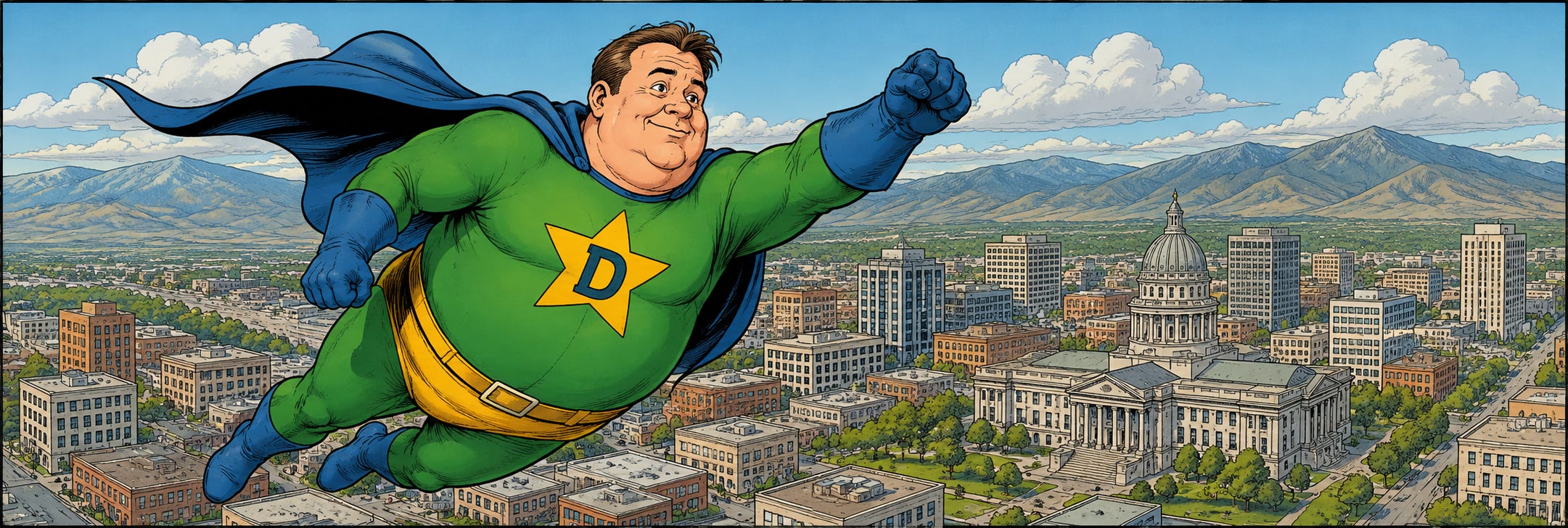
In the summer of 2025, I had one of those opportunities that, according to Thomas Edison, most people don’t recognize because it comes “dressed in overalls and looks like work.” At the time, I was the provost of a small college in central Utah, and neither I nor the college had made much progress in figuring out how to incorporate Artificial Intelligence into the curriculum.
Neither the state legislature nor the Utah System of Higher Education appeared likely to let us continue in our innocence. A workforce readiness report commissioned by the legislature in December of 2024 indicated that an overwhelming majority of employers would not hire recent college graduates who could not use AI to increase their productivity. From that point on, the mandates wrote themselves (with, I suspect, more than a little bit of help from Claude or ChatGPT). AI had to be incorporated into our curriculum, and, as provost, I had to supervise the effort.
At the time, most of my knowledge of AI came from rumors and complaints, along with the occasional doomsday prophecy invoking Hal or Skynet as a precedent for world domination. I did not know how AI worked or what it could do. I did know (or had come to believe) that it was destroying our students’ ability to think, ruining the environment, and stealing training materials from almost everybody’s books—including mine, as I discovered when I received the class-action lawsuit notices in the mail.
At my core, I am an Enlightenment humanist, more comfortable in dusty libraries than with computers. I like old books and great ideas. I think that Homer and Euripides still have a lot to say to us and that Dante and Dostoyevsky are the last word on most subjects of any importance. The composition textbook that I edit for Norton—Reading the World: Ideas that Matter—is one of the last bastions of the great-ideas model in contemporary composition. AI chatbots simply did not fit into this worldview.
Certified Prompt Engineer
Railing against and trying to boycott AI was not an option. And I could hardly throw my shoes into AI data centers half a world away. I had a professional responsibility to implement both classroom AI policies and curricular guidelines, so I did what I always do in such situations: I read a stack of books on teaching with AI. And then I enrolled in an online course in prompt engineering through Vanderbilt University. I knew that I had to give the new technology a fair chance and find meaningful ways to use it. Otherwise, I would never be able to convince faculty members—most of whom were far more skeptical than I was about artificial intelligence—to give it the state-mandated old college try.
The course went well. I learned some genuinely interesting ways to prompt AI bots, and I saw several ways this technology could be used in writing classes—especially in English composition, my home discipline. I saw that AI was really good at some things and really bad at others. I also understood that there were both ethical and unethical ways to use artificial intelligence in college writing.
When I finished, I was (along with 80,000 of my best friends who took the course with me) a Certified Prompt Engineer. But more than that, I came away converted—not, perhaps, to the inherent and acontextual value of AI, but to the proposition that it was going to become an important part of our students’ lives, and that professors like me had a responsibility to teach them how to use it wisely and ethically.
I also came to believe that humanities classrooms were the best place to teach AI, precisely because the humanities are well positioned to help us negotiate the boundaries between artificial intelligence and genuine human wisdom. I want students to understand that AI is a tool and that, like every human tool from stone axes to the Internet, it can extend human reach tremendously—but at a cost.
Throughout the course, I thought frequently of Socrates’ warnings against writing in Plato’s Phaedrus. Writing decreases the human reliance on memory, and it records subjective ideas as truth, making it impossible to ever engage a long-dead author in a meaningful dialectic. This seemed right to me, even though I only knew about Socrates because Plato had recorded the conversation in writing—perhaps accurately, perhaps with his own spin—2,500 years ago.
I also thought of another curious phenomenon in my own life. Since switching from maps and memory to the GPS built into my phone, I have been able to go many places without getting lost. But I have also lost the ability to find my way—even to places I know very well—without the GPS voice telling me where to turn. Once I delegated wayfinding to a convenient technology, I became completely dependent on it for things I used to take for granted.
As I considered what AI could give us and what it might take from us, I realized my last assignment in the course was to create a visual design using AI. And this assignment alone shifted my thinking from “AI gives us some things and takes away others” to “AI is the best thing to ever happen to me.” To explain why I felt this way, I need to take a detour back to my adolescent love of visual satire.
My Three Heroes
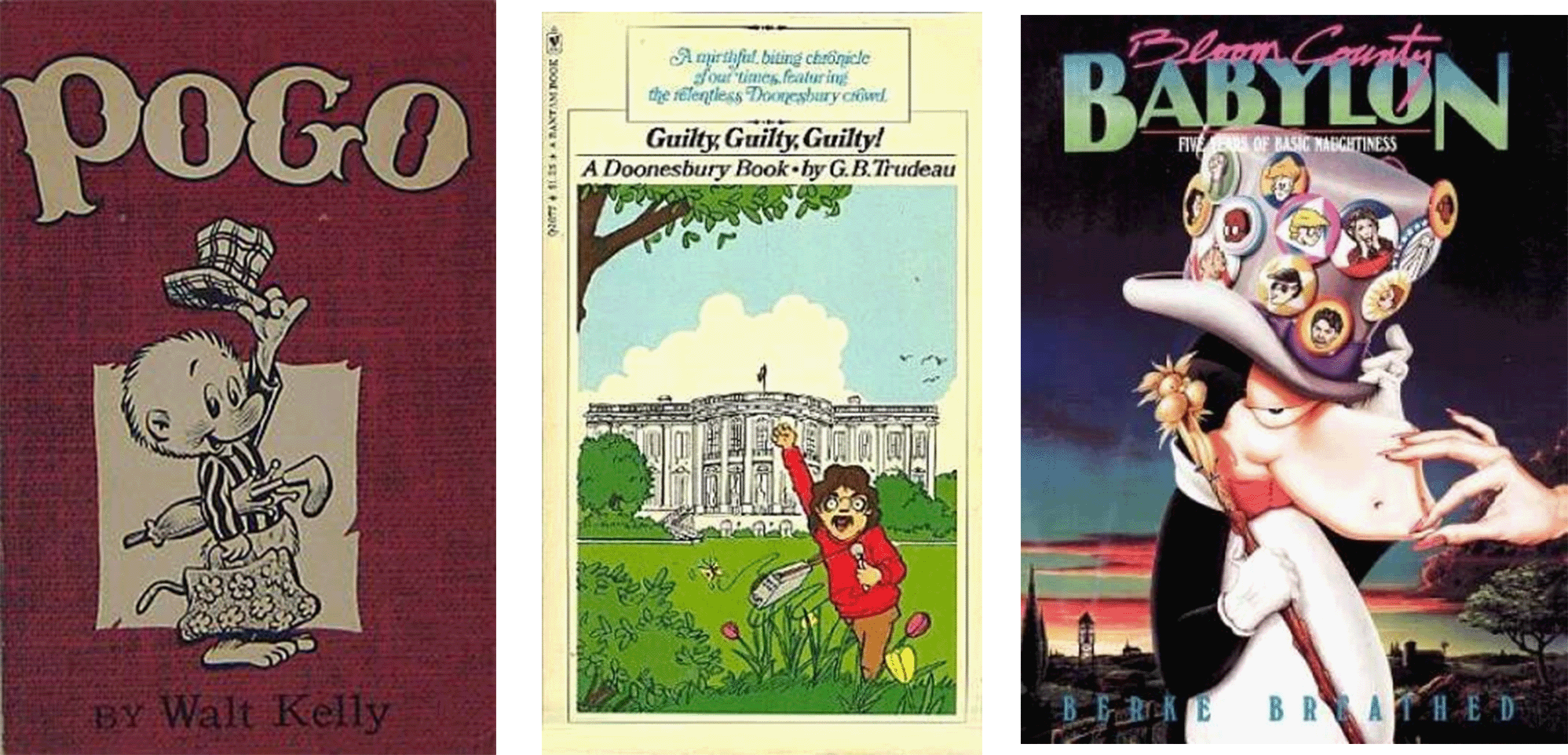
One of my father’s proudest possessions when I was growing up was a complete set of Walt Kelly’s original Pogo books, which I started reading in fifth grade and continued until I went to college. Kelly’s Okefenokee Swamp fascinated me. Every Christmas, my family sang, “Deck Us All with Boston Charlie” despite having no idea what it meant. I learned about the John Birch Society in a long conversation with my father after reading about the “Jack Acid Society” in a Pogo book. And I was probably the only kid in my middle school class who knew that cherchez la femme meant “look for the woman”—not because I knew anything about French, or, for that matter, women, but because it was the pun behind Kelly’s bardic tortoise, Churchy LaFemme.
Walt Kelly was my first taste of political satire in any form. He brought all of the political figures of a previous generation into his swamp. There I met Richard Nixon, Hubert Humphrey, George Romney, and Joseph McCarthy (i.e. “Simple J. Malarkey”)—all turned into critters and turned loose on the swamp dwellers. It was fascinating, heady stuff for an adolescent boy living in Oklahoma in the 1970s.
When I was about 15, I discovered Doonesbury in our local newspaper, and I soon owned the three omnibus editions published between 1970 and 1978. Unlike Pogo, which was all in my past, I could read Doonesbury every day, and it dealt with my headlines. I got in the habit of copying strips I found meaningful and taping them to my locker, my bedroom door, and, on more than one occasion, to papers I turned in to my deeply unimpressed high school teachers.
When Garry Trudeau went on an extended sabbatical in 1983–1984—just when I was graduating from high school and entering college—I discovered my third satirical master, Berke Breathed, whose Bloom County comic strip was one of the highlights of my freshman year. I owned all of the books, followed the comic religiously in the daily paper, and plastered my dorm room with xeroxed strips. I even had a Bill the Cat plush toy.
By the time I finished my freshman year of college, I was fairly sure I wanted to be a satirical cartoonist, and my head was full of ideas for what to draw. But I had a big problem. I couldn’t draw anything. Nada. Zip. Zilch. I couldn’t manage a straight enough line for a stick figure. While I had some facility with satirical prose, I had absolutely none with satirical pictures. Or any kind of pictures. I just couldn’t do it.
So I said goodbye to my actual dream and pursued a Ph.D. in English instead. I specialized in the British Eighteenth Century and all of its glorious satire: Dryden, Swift, Pope, and Fielding, among others. And I forgot all about wanting to draw cartoons. I taught literature for twelve years—including a class that I developed on Satire—and have now spent nearly twenty years provisting at three different institutions.
In all this time, I never really thought about my earlier desire to be a satirical cartoonist until the fateful day, forty years after my freshman year in college, when an online instructor assigned me to create something visual with ChatGPT.
(To be continued. . . .)
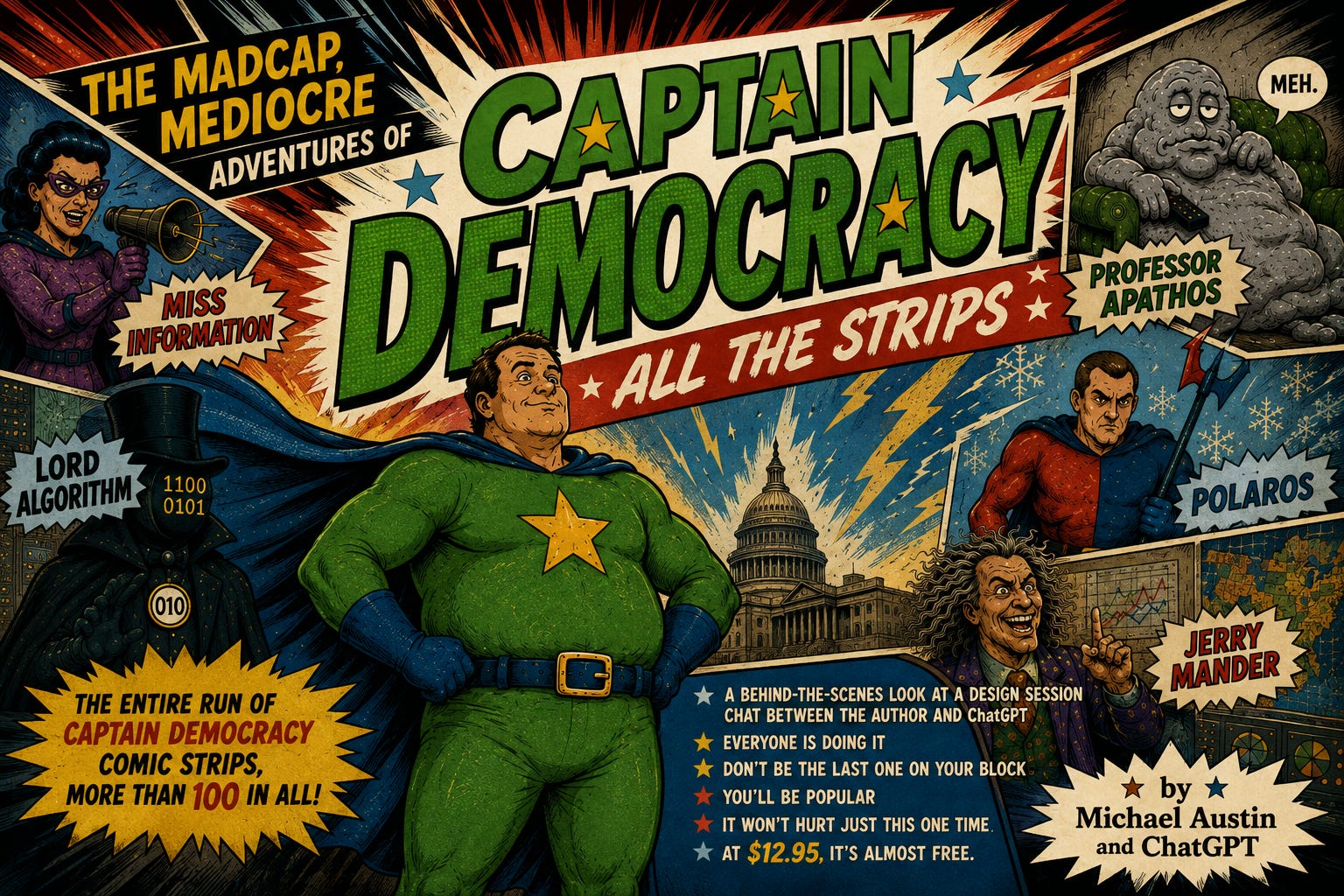
Coming Soon: Captain Democracy: All the Strips, from Publius Press: a comprehensive record of every Captain Democracy strip, including never-before-known production details and the full transcript of a design session.
I look forward to reading the second part of this, Michael, confident that I will both learn from and likely disagree with it!